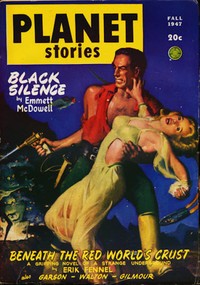
About 47 minutes
Morley's Weapon — Reading Notes
Social Speculation
10,717 recorded words. 4 minutes difference from this book's estimate.
View Gutenberg source #63836

Before opening Moon of Treason — Themes and Context, the edition data offers a quick orientation: 11,711 words, 51 min estimated reading time, and 2 detected text sections.
The text analysis averages about 12.0 words per sentence, while the detected sections provide another way to judge how the source is divided.
Project Gutenberg metadata also associates the work with “Science fiction,” connecting these edition facts with the source record’s subject description.
Explore this collection
These alternatives are selected using recorded categories and estimated reading time.
About 47 minutes
Social Speculation
10,717 recorded words. 4 minutes difference from this book's estimate.
View Gutenberg source #63836About 45 minutes
Social Speculation
10,275 recorded words. 6 minutes difference from this book's estimate.
View Gutenberg source #64073About 45 minutes
Social Speculation
10,191 recorded words. 6 minutes difference from this book's estimate.
View Gutenberg source #64624Search stored excerpts and compare books → Choose by your preferences →
Choices use stored catalog measurements. Estimates vary with reading speed. A shared category is a catalog label, not a claim that two books have the same argument or literary quality.
Search reads excerpt text stored with this catalog and links to its associated Gutenberg record. The connection is stored in the site database; this tool does not recheck that every excerpt is word-for-word identical to that external record. Excerpt search does not cover every chapter and does not verify historical publication dates.
Catalog snapshot checked: 2026-09-25. Coverage: 91 public books, 91 available source excerpts.
Read the complete public-domain text at its original source.
Read on Project GutenbergThe story opens with Clyde Vickers shuffling down a gangplank onto the Moon, his body still adapted to Jupiter's crushing gravity. The author establishes Vickers' physical and social vulnerability in a few strokes: his ill-fitting gray suit, the ISP officer's contemptuous recognition of a "two-time loser," and the crowd's whispers. McDowell builds tension through sensory details—the spaceliner's "pistol-like reports" as it expands, hoar frost on its hull, the cold striking through thin cloth. Vickers' nictitating lids, which he keeps lowered to hide his mutant eyes, signal the first hint of his unusual ability.
McDowell structures the narrative around Vickers' peculiar vision, which allows him to see through solid barriers. This power dictates the story's rhythm: Vickers constantly scans his surroundings, locating guards, women in a harem, or an official in an office through "several walls that acted like layers of cheesecloth." The author uses this to create a layered geography, where action in one room is visible to Vickers but hidden from others. The cutting of a "four foot window" into a wall with an atomic knife literalizes the story's preoccupation with thresholds and penetration. Movement is never simple; Vickers must calculate angles, anticipate patrols, and judge distances through intervening obstacles.
Vickers' body carries the memory of Jupiter's penal mines. He moves with a "cautious shuffle," feeling "buoyant as a toy balloon" in lunar gravity. McDowell repeatedly contrasts this physical awkwardness with the need for stealth. The parole board's restrictions—no leaving the Moon, mandatory check-ups, psycho-therapeutic treatments—form a bureaucratic cage as confining as any cell. The ISP officer's sneer and the crowd's whispers reinforce Vickers' status as an outcast. Even his muscles, "acquired only in the killing gravity of Jupiter's penal mines," mark him as dangerous. The story's tension arises from the friction between Vickers' constrained legal position and his audacious plans.
The Arabian embassy serves as a key setting, described as "a mixture of the old and the new." McDowell contrasts the harem's ancient customs—"dark-eyed houris with slender waists and full hips"—with the atomic knife and plastic air taxis of the future. Vickers navigates this hybrid space by exploiting both his vision and his knowledge of cultural patterns: the harem guard's predictable post, the inviolate women's quarters. The author uses the embassy's opulence—"antique hangings, exquisite decorations"—as a backdrop for violence, such as the guard's beheading. The setting underscores the story's theme of surveillance and infiltration, where Vickers must read both architecture and social codes.
Vickers' atomic knife, which projects a "long blade of coruscating atomic energy," is both a practical tool and a marker of his ambiguous role. He uses it to cut through walls, weld doors shut, and kill—but each use carries consequences. After decapitating the guard, Vickers feels "a little sick at his stomach." The knife's precision (it cuts plastic "as if the tough plastic had been butter") contrasts with the messy reality of violence. McDowell emphasizes the weapon's dual nature: it enables Vickers' infiltration but also ties him to the criminal past he cannot escape. The knife reappears at key moments, linking the story's action sequences to Vickers' internal conflict.
Readers should attend to how McDowell uses Vickers' vision not as a superpower but as a burden—it forces him to see threats everywhere, yet never grants him safety. The novella's brevity (under 12,000 words) rewards close attention to its spatial logic: each corridor, wall, and room is a tactical problem. The excerpts suggest a work that balances pulp action with a grim view of rehabilitation and surveillance.
There’s something about Vickers slipping through those harem corridors, never quite belonging anywhere, that stays with me long after the airlock seals. It reminds me of the quiet unease I felt reading Tiger by the Tail — different worlds, same ache of being seen but not known. That old feeling returns. Tiger by the Tail — Edition Insights holds that memory gently.
Create a short personal record of your experience with this book.