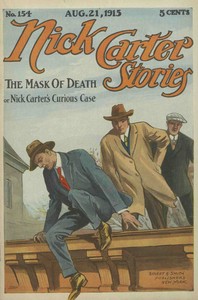
Nick Carter Stories No. 154, August 21, 1915: The mask of death; or, Nick…
Okay, let's set the scene. It's the dog days of summer in 1915. A wealthy businessman is discovered in his private study, doors and windows locked from the inside. He's slumped at his desk, stone dead, with a hideous, grinning theatrical mask strapped to his face. There's no sign of a struggle, no poison in his glass, and no way anyone could have gotten in or out. The city's finest are ready to call it a strange suicide or a bizarre accident. That's when they call in Nick Carter.
The Story
Nick Carter, the star of the long-running pulp magazine series, is part genius detective, part man of action. He doesn't just examine the scene; he lives in it. The mystery of the mask is a real head-scratcher. How does a simple piece of papier-mâché become an instrument of death? The trail leads Nick from the victim's high-society circles into the shadowy world of stagecraft, secret vendettas, and a very clever killer who uses psychology as much as physics to commit the perfect crime. The plot moves at a breakneck pace, with Nick following thin leads, facing danger, and using his famous 'little gray cells' (years before Poirot!) to piece together a motive and method that are truly unique.
Why You Should Read It
Look, this isn't high literature, and it doesn't try to be. That's its charm. Reading this is like stepping into a time machine. You get the feel of a pre-war America, the language, the attitudes, and the sheer fun of a pure puzzle mystery. Nick Carter is a great character—confident, capable, and always three steps ahead. The solution to the locked room is genuinely clever. It's not about magic or secret passages; it's about understanding human nature and a bit of simple science used in a terrifying way. It’s a masterclass in economical storytelling. Every page pushes the story forward.
Final Verdict
This is a perfect pick for anyone who loves classic detective fiction, locked-room mysteries, or just a fun, short escape. It's ideal for history buffs who want to see the roots of the detective genre, or for mystery fans tired of overly complex modern thrillers. If you enjoy Sherlock Holmes, Father Brown, or early Agatha Christie, you'll see where some of that DNA comes from. Think of it as a literary snack—a satisfying, clever bite of nostalgia and intrigue that you can devour in one sitting. Just maybe don't read it right before bed if you have a collection of theatrical masks on your wall.
There are no legal restrictions on this material. It is available for public use and education.