About 94 minutes
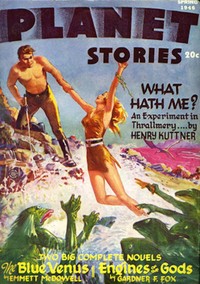
The Blue Venus — Background and Themes
Space Future
21,506 recorded words. 14 minutes difference from this book's estimate.
View Gutenberg source #63779

The source record for The Great Green Blight — Story, Setting & Ideas measures this digital text at 24,724 words, 1 hr 48 min estimated reading time, and 3 detected text sections.
The text analysis averages about 10.2 words per sentence, while the detected sections provide another way to judge how the source is divided.
Project Gutenberg metadata also associates the work with “Science fiction,” connecting these edition facts with the source record’s subject description.
Explore this collection
These alternatives are selected using recorded categories and estimated reading time.
About 94 minutes
Space Future
21,506 recorded words. 14 minutes difference from this book's estimate.
View Gutenberg source #63779About 124 minutes
Space Future
28,336 recorded words. 16 minutes difference from this book's estimate.
View Gutenberg source #64043About 81 minutes
Space Future
18,419 recorded words. 27 minutes difference from this book's estimate.
View Gutenberg source #64726Search stored excerpts and compare books → Choose by your preferences →
Choices use stored catalog measurements. Estimates vary with reading speed. A shared category is a catalog label, not a claim that two books have the same argument or literary quality.
Search reads excerpt text stored with this catalog and links to its associated Gutenberg record. The connection is stored in the site database; this tool does not recheck that every excerpt is word-for-word identical to that external record. Excerpt search does not cover every chapter and does not verify historical publication dates.
Catalog snapshot checked: 2026-09-25. Coverage: 91 public books, 91 available source excerpts.
Read the complete public-domain text at its original source.
Read on Project GutenbergThe opening of The Great Green Blight drops the reader into a space liner lounge where Norman Saint Clair's unease is palpable. A steward's reassurance—'We'll pick up our escort this side of the moon'—does little to calm him, as ships have been vanishing without trace. The narrative voice is brisk, leaning on physical cues: a 'gray fear' gnaws at his vitals, and his 'lank, six-foot-two frame' settles into an acceleration chair. The setting is deliberately generic—a 'magnificent lounge'—but the tension is specific: the T.I.S. requires identity books, and the sailing is 'grim, quiet.'
The first excerpt establishes Norman as a reluctant traveler, his 'stubborn streak' overriding panic. The prose favors short, punchy sentences: 'Space opened and swallowed them.' The threat is vague—ships disappear beyond Mars—but the atmosphere is thick with dread. The steward's mention of radium cargo and a naval escort hints at a larger conflict, yet the focus stays on Norman's internal state. His gaunt face, blond hair, and nervous gestures are repeated, grounding the reader in his perspective. The dialogue is functional, advancing plot without ornament. Notably, the excerpt ends mid-sentence, leaving Norman's decision to stay unresolved.
In the middle excerpt, the story shifts from solitary anxiety to collective scheming. Norman, now a captive, joins Koal and a dozen others—a 'motley assortment' including a former T.I.S. agent, a corporation lawyer turned thief, and a Venusian assassin with a 'blue star of the killer cast' tattooed on his forehead. The dialogue becomes more theatrical: Koal declares, 'We'll bring the Sinn Fein Society back to life.' The plan is vague—'union among the men'—but the danger is immediate: a 'committee of execution' to kill informers. Jennifer, the only woman present, offers a tender line ('you really are rather wonderful'), but the tone remains grim. The excerpt emphasizes secrecy and betrayal, with Pepperell's cynical quip about 'cut worms' undercutting the gravity.
The third excerpt, though truncated by the Project Gutenberg license, reinforces the underground tone. Norman's 'passionate appeal for union' is delivered twice, suggesting a repetitive structure. The group's diversity—Earthmen, Martians, Venusians—mirrors the Empire's breadth, but their criminal backgrounds undercut any heroic gloss. Acpsahme's insistence on 'carefully chosen' members and a 'committee of execution' introduces a pragmatic ruthlessness. The party setting (Koal's quarters at nineteen-hundred) contrasts with the life-or-death stakes. The prose leans on physical descriptions: 'bland-faced, heavy-set' Pepperell, 'noble brow and prematurely gray hair' of the lawyer-thief. These details build a rogue's gallery rather than a unified front.
The excerpts reveal a consistent narrative voice: third-person limited to Norman, with occasional omniscient asides ('It was unprecedented'). The pacing alternates between tense quiet (the lounge) and rapid dialogue (the party). Recurring motifs include identity documents, tattoos, and the color yellow (the steward's uniform, the Venusian's skin). The Dohlmites remain offstage, referred to only as 'plant men' or captors. The excerpts do not clarify how Norman was captured or what the 'broadcast machine' does, leaving gaps that the full text likely fills. The structure—from individual fear to group conspiracy—suggests a classic adventure arc, but the incomplete excerpts prevent confirming any resolution.
Readers should note that the excerpts cover only the opening and middle sections, ending before any confrontation with the Dohlmites. The narrative's reliance on Norman's limited viewpoint means that key events (his capture, the nature of the blight) are implied rather than shown. Pay attention to how McDowell uses physical details—tattoos, clothing, gestures—to characterize a large cast quickly. The Sinn Fein reference and the 'committee of execution' hint at a darker, more pragmatic rebellion than typical space opera.
I kept thinking about how Norman’s fear turned into something steadier, how captivity sharpened his focus instead of breaking it. That quiet shift stayed with me long after I closed the book. It reminded me of something I once read about the weight of a single choice, and how it lingers. The Fatal Third — A Reader’s Guide touched that same place, gently, like an old friend’s hand on my shoulder.
A brief reflection can help important ideas stay with you longer.