About 34 minutes
Mind Worms — Text and Context
Other Worlds
7,757 recorded words. 2 minutes difference from this book's estimate.
View Gutenberg source #64415
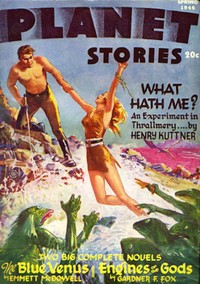
Before opening Crisis on Titan — Background and Themes, the edition data offers a quick orientation: 7,341 words, 32 min estimated reading time, and 1 detected text section.
The text analysis averages about 16.7 words per sentence, while the detected sections provide another way to judge how the source is divided.
Project Gutenberg metadata also associates the work with “Science fiction,” connecting these edition facts with the source record’s subject description.
Explore this collection
These alternatives are selected using recorded categories and estimated reading time.
About 34 minutes
Other Worlds
7,757 recorded words. 2 minutes difference from this book's estimate.
View Gutenberg source #64415About 29 minutes
Other Worlds
6,573 recorded words. 3 minutes difference from this book's estimate.
View Gutenberg source #63783About 36 minutes
Other Worlds
8,191 recorded words. 4 minutes difference from this book's estimate.
View Gutenberg source #63843Search stored excerpts and compare books → Choose by your preferences →
Choices use stored catalog measurements. Estimates vary with reading speed. A shared category is a catalog label, not a claim that two books have the same argument or literary quality.
Search reads excerpt text stored with this catalog and links to its associated Gutenberg record. The connection is stored in the site database; this tool does not recheck that every excerpt is word-for-word identical to that external record. Excerpt search does not cover every chapter and does not verify historical publication dates.
Catalog snapshot checked: 2026-09-25. Coverage: 91 public books, 91 available source excerpts.
Read the complete public-domain text at its original source.
Read on Project GutenbergThe story opens with Sergeant Hallihan barking a distorted cadence—"Hut! Twuh, hree, foar"—as dust-caked I.P. men march toward a mine under Titan's alien sky. The narrator immediately signals a tension between military discipline and the absurd: these are "hard-bitten, two-fisted, hell for leather" soldiers reduced to ditch-digging, while the captain rides in a gravity-repellent car. The prose leans into colloquial vigor, with Hallihan's internal grumbling and the men's dragging feet setting a weary, sardonic tone.
Adams establishes the setting through sensory detail—aching feet, a slow grav-car, the shaggy "Barber's Delights" that mimic the soldiers' step with bristle-mats instead of feet. The voice is brisk, pulpy, and unafraid of comic juxtaposition, as when the alien creatures are described with the same deadpan precision as the human troops.
The narrative voice shifts between Hallihan's gruff interior monologue and a detached third-person that catalogs the absurdities of military life on an alien moon. The opening drill-call—"Hut! Twuh, hree, foar"—is not just color; it establishes a rhythm that the prose itself follows, with short, punchy sentences during action and longer, more sardonic passages during lulls. Adams uses the sergeant's perspective to filter the men's resentment: "orders were orders, and he prided himself on his ability to carry out a command." This internal conflict—between duty and disgust—gives the voice a dry, understated humor that persists even as the situation turns lethal.
The aliens, too, are rendered through this voice. The Barber's Delights "imitated the brisk step of the soldiers with amazing exactness, though they possessed no semblance whatsoever of feet." The narrator's deadpan delivery of such contradictions—bristle-mats sweeping like "self-propelling brooms"—keeps the tone from tipping into outright comedy, maintaining a soldierly matter-of-factness that grounds the strangeness.
The story's pace mirrors a military operation: methodical march, sudden attack, tense waiting, then explosive resolution. Early paragraphs linger on the march's monotony—"more than one soldier was dragging his feet"—before the Squeakers' assault accelerates the action. Adams controls tempo through sentence length: during the battle, fragments and short declaratives dominate ("The creature crumpled under the heat-beam, shrieking in agony"), while the lulls stretch with Hallihan's anxious waiting: "He waited...."
The turning point arrives with a prolonged, hideous screech—"growing, swelling in intensity"—and the gates burst open. Here the pace becomes frantic, with Squeakers spilling out and soldiers "pour[ing] it to the rats." The morning-after scene slows again, surveying the "inverted graveyard" of blackened bodies. This three-beat structure—march, siege, mopping-up—gives the short story a compact, almost musical shape, with the captain's baseball-mimicry as the cryptic pivot.
Two details recur with structural purpose: the Barber's Delights and Captain Staley's baseball gestures. The B.D.s first appear as comic relief—"log-like bodies" with shaggy coats—but their bristle-mats and mimicry become crucial to the plot. Staley's "arms snapped back like a baseball pitcher's" is repeated verbatim, first puzzling Hallihan, then signaling the captain's plan. The gesture is a physical motif that bridges the mundane (soldiers as ditch-diggers) and the strategic (using the B.D.s to panic the Squeakers).
Adams also repeats the phrase "Hut! Twuh, hree, foar" at the story's opening, grounding the reader in Hallihan's voice. The cadence returns only implicitly in the battle's rhythm, but its absence during the siege underscores the breakdown of order. These recurrences—the drill-call, the pitcher's windup, the B.D.s' bristle-mats—are not mere decoration; they are the story's structural bones, linking character, setting, and resolution without overt exposition.
The story rewards attention to its verbal and physical rhythms—the way a drill cadence, a baseball gesture, and a shaggy alien's bristles all become instruments of strategy. Adams trusts the reader to connect these dots without explanation, letting Hallihan's slow comprehension mirror our own. For those interested in pulp-era craft, Crisis on Titan demonstrates how a short story can compress character, setting, and plot into a tight, almost musical structure, where every repeated detail earns its place.
That old _Planet Stories_ tale about the drill-cadence and the siege—it stayed with me, not for the action, but for how the men held their rhythm together. There’s a quiet ache in that. I got the same feeling from Bunzo Farewell — Context and Discussion, like a long exhale after someone leaves the room. Just echoes left.
Your answers remain private and are stored only in this browser.