About 28 minutes
The Android Kill — Inside the Classic
Space Future
6,292 recorded words. 0 minutes difference from this book's estimate.
View Gutenberg source #64010
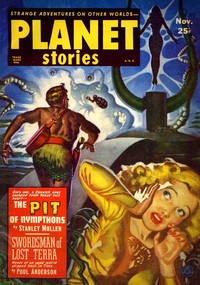
For Wreck Off Triton — Key Ideas to Explore, the stored edition analysis reports 6,273 words, 28 min estimated reading time, and 1 detected text section.
The text analysis averages about 18.8 words per sentence, while the detected sections provide another way to judge how the source is divided.
Project Gutenberg metadata also associates the work with “Science fiction,” connecting these edition facts with the source record’s subject description.
Explore this collection
These alternatives are selected using recorded categories and estimated reading time.
About 28 minutes
Space Future
6,292 recorded words. 0 minutes difference from this book's estimate.
View Gutenberg source #64010About 29 minutes
Space Future
6,587 recorded words. 1 minutes difference from this book's estimate.
View Gutenberg source #63860About 27 minutes
Space Future
6,029 recorded words. 1 minutes difference from this book's estimate.
View Gutenberg source #63971Search stored excerpts and compare books → Choose by your preferences →
Choices use stored catalog measurements. Estimates vary with reading speed. A shared category is a catalog label, not a claim that two books have the same argument or literary quality.
Search reads excerpt text stored with this catalog and links to its associated Gutenberg record. The connection is stored in the site database; this tool does not recheck that every excerpt is word-for-word identical to that external record. Excerpt search does not cover every chapter and does not verify historical publication dates.
Catalog snapshot checked: 2026-09-25. Coverage: 91 public books, 91 available source excerpts.
Read the complete public-domain text at its original source.
Read on Project GutenbergThe story opens with Ron Carnavon, a wanted criminal who scuttled the treasure ship Thunderbird and left it orbiting Triton with its cargo of Plutonian sapphires. After altering his face and fingerprints via hypnosurgery, he hires Pop Wills, an alcoholic spacer with a rusty ship called the Carefree, to retrieve the gems. Carnavon plans to kill Pop afterward, but the narrative hints that Pop may not be as broken as he appears.
The opening establishes Carnavon as methodical and ruthless. He has considered every risk, from evading the High Space Guard to choosing a partner who “wouldn’t be missed.” Pop Wills is described as an “old soak” whose assets were “liquidated to buy gin,” making him seem expendable. Yet the text notes that “the long years in space had taken a toll on the old man. Actually a greater toll than even Carnavon could have imagined.” This line plants a seed: Pop’s deterioration may hide unexpected depths. Readers should watch for how Pop’s apparent weakness might become a weapon.
The story is set in the Earth-Mars-Venus triangle, a lawless frontier policed by the well-funded High Space Guard. Carnavon moves through ports like Canalopolis, Marsport, and Yakki—a “spaceman’s boneyard” where broken ships and broken men gather. The Carefree is a “rusty bucket,” and Pop’s poverty is tied to gin. The physical details—sand-skis across Syrtis Major, the Grand Canal, Trojan orbits—create a gritty, lived-in solar system. The wreck itself orbits a million miles off Triton, a frozen corpse spilling bodies. This is not a clean future; it is stained and desperate.
Late in the story, during the salvage operation, Pop looks up and sees “the agonized, dead face of a twelve-year-old boy.” This vision triggers a violent reaction: “All the fear and weakness turned to a bitter hate and surged forward.” Pop charges Carnavon with a “long shard of steel” like a lance. The prose shifts from cold calculation to raw emotion. Carnavon fires his blaster, killing Pop, but the recoil sends him spinning into space, his sapphires scattering like “tiny, mocking moonlets.” The ending is delivered via a terse Guard message: Carnavon dies of asphyxiation, his scheme undone by physics and his own weapon.
The narrative voice is clipped and cynical, matching Carnavon’s worldview. Phrases like “It was only reasonable” and “the proper steps would be the elimination” reveal his cold logic. But the story undercuts him at every turn. The hypnosurgery, the careful planning, the choice of a disposable partner—all lead to an accidental death. Pop’s final smile suggests a moral victory: he “conquered his fear at last.” The Guard’s dry report (“UNACCOUNTABLY FOUND… DEAD”) adds bureaucratic irony. The structure moves from meticulous setup to chaotic payoff, rewarding attention to early details.
Several small details gain significance on rereading. Carnavon’s “curling lip” at Pop’s gin habit foreshadows his underestimation of the old man. The “rusty bucket” of a ship becomes the stage for the final confrontation. The “watch spring” simile for Pop—a coiled, rusted thing that can still snap—is literalized when he attacks. Even the sapphires, described as “precious” and “mocking,” end up as orbital debris. The story rewards attention to its language: the blaster’s “fiery recoil” is both cause and symbol of Carnavon’s downfall.
This story is best read with an eye for irony and reversal. The opening presents a master planner, but the excerpts suggest his plan unravels through small human factors—fear, hate, a child’s face. Pay attention to Pop’s backstory, hinted at only in fragments, and to the physical details of the wreck and the void. The ending, delivered as a dry official message, leaves much unsaid. Consider what the story implies about justice, luck, and the cost of greed in a hardscrabble solar system.
I keep thinking about Wreck Off Triton, the way trust can crack open under pressure, and it drifts me back to an old favorite, Venusian Invader — Reading Companion. That one held a similar quiet tension beneath its surface, the sense that a person’s past might be the most dangerous thing aboard a ship. Strange how two such different voyages can echo the same loneliness.
Answer a few questions and save a private reflection on this device.