About 83 minutes
The Virgin of Valkarion — Background and Themes
Other Worlds
18,958 recorded words. 1 minutes difference from this book's estimate.
View Gutenberg source #64022
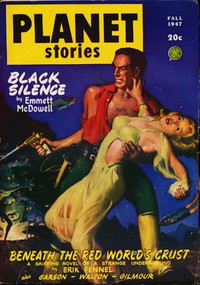
The source record for Beneath the Red World's Crust — A Closer Reading measures this digital text at 19,247 words, 1 hr 24 min estimated reading time, and 2 detected text sections.
The text analysis averages about 14.2 words per sentence, while the detected sections provide another way to judge how the source is divided.
Project Gutenberg metadata also associates the work with “Science fiction,” connecting these edition facts with the source record’s subject description.
Explore this collection
These alternatives are selected using recorded categories and estimated reading time.
About 83 minutes
Other Worlds
18,958 recorded words. 1 minutes difference from this book's estimate.
View Gutenberg source #64022About 85 minutes
Other Worlds
19,407 recorded words. 1 minutes difference from this book's estimate.
View Gutenberg source #64361About 92 minutes
Other Worlds
20,998 recorded words. 8 minutes difference from this book's estimate.
View Gutenberg source #63875Search stored excerpts and compare books → Choose by your preferences →
Choices use stored catalog measurements. Estimates vary with reading speed. A shared category is a catalog label, not a claim that two books have the same argument or literary quality.
Search reads excerpt text stored with this catalog and links to its associated Gutenberg record. The connection is stored in the site database; this tool does not recheck that every excerpt is word-for-word identical to that external record. Excerpt search does not cover every chapter and does not verify historical publication dates.
Catalog snapshot checked: 2026-09-25. Coverage: 91 public books, 91 available source excerpts.
Read the complete public-domain text at its original source.
Read on Project GutenbergThe story opens with Nick Tinker dodging a sniper's bullet in a deserted Martian city, his survival hinging on a trick learned during Earth's wars. The prose immediately establishes a world of physical and moral erosion: the 'eroded grey wall,' the 'thin, chilling night wind,' and the 'undead Martian city' where living screen-creatures guard every opening. Fennel grounds the science fiction in tactile discomfort—sticky moisture underfoot, a jacket torn by his own gun's recoil—and in a protagonist whose Gravinol-induced numbness gives way to a sharp, unwanted alertness. This is not a hero striding confidently into adventure; it is a man who 'crumple[s] and fall[s]' by instinct, fully alive only when his stoic fatalism is stripped away.
Nick Tinker carries Earth's wars with him. The text notes he joined the Special Corps at seventeen, and his combat reflexes—feigning death, zigzagging under fire—are explicitly learned 'during the War days back on Earth.' Fennel does not describe those wars, but their residue is everywhere: in the 'stoic fatalism' Nick loses, in the 'New Governments' he trusts to deal with the villain Harmon, and in the implication that Earth's conflicts have not ended but merely shifted offworld. The Martian setting is not a blank frontier but a place already scarred by human violence. When Nick reflects that 'nothing had ever been won by defensive action alone,' the line echoes a soldier's bitter pragmatism, not a pioneer's optimism.
The voras are the story's most distinctive invention: living creatures bred to tunnel and pump water, controlled by thought. Fennel treats them as biological machines, but with limits—they cannot be reached telepathically over long distances, and some burrows are too small for a human to pass through. The screen-creatures that guard windows and doors are similarly organic, 'amorphous and deadly,' and the door-creature Nick encounters still twitches with residual life. This is a Mars where the alien civilization's technology is inseparable from its biology, and where that biology persists as both obstacle and resource. The Martian Klev's 'complicated diagram in the sand' hints at a forgotten knowledge that must be resurrected, not simply applied.
The central negotiation scene—Nick, Susan, and the aged Martian Klev—is built on mistrust and incomplete translation. Klev hesitates to reveal the water caves, fearing the Exploiters will never leave if water is found. Susan translates, but the process is slow: 'he chirped and clicked for a good three hours.' Fennel uses the setting's physical harshness to underline the stakes: the sun 'was almost down,' the moon shadows 'too black' to study the chart, and the next supply ship is eight weeks away. Nick's plan to force a ship from Earth by offering water is a gamble, and the text admits it: 'I'm not sure, yet.' The scene ends not with a triumphant plan but with a cramped crawl into a narrow tunnel, the glow-plate their only light.
Readers should attend to how Fennel uses sensory details—the feel of a torn door-creature, the heat of a bullet-scorched jacket—to make Mars feel physically oppressive rather than merely exotic. The excerpts offer only fragments of the plot's resolution, but the patterns of tension are clear: between human and alien, between defense and offense, between the remembered weight of Earth and the immediate pressure of a dying world. The story rewards attention to its small, precise observations of biology and behavior.
Reading again how Fennel made Mars feel so achingly dry, that dust clinging to Nick’s lungs, I was reminded of another old favorite gathering dust on my shelf. There’s a similar patience in how it lets tension settle into the quiet spaces between characters. It made me think of Against Tetrarch — Inside the Classic, and the way it lingers on unspoken loyalties.
Capture what you thought, learned, and would like to remember.