About 84 minutes
Beneath the Red World's Crust — A Closer Reading
Other Worlds
19,247 recorded words. 1 minutes difference from this book's estimate.
View Gutenberg source #64313
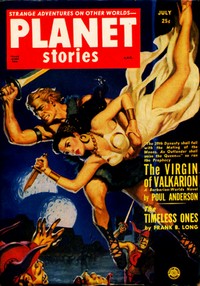
For The Virgin of Valkarion — Background and Themes, the stored edition analysis reports 18,958 words, 1 hr 23 min estimated reading time, and 2 detected text sections.
The text analysis averages about 14.3 words per sentence, while the detected sections provide another way to judge how the source is divided.
Project Gutenberg metadata also associates the work with “Science fiction,” connecting these edition facts with the source record’s subject description.
Explore this collection
These alternatives are selected using recorded categories and estimated reading time.
About 84 minutes
Other Worlds
19,247 recorded words. 1 minutes difference from this book's estimate.
View Gutenberg source #64313About 85 minutes
Other Worlds
19,407 recorded words. 2 minutes difference from this book's estimate.
View Gutenberg source #64361About 75 minutes
Other Worlds
17,232 recorded words. 8 minutes difference from this book's estimate.
View Gutenberg source #63900Search stored excerpts and compare books → Choose by your preferences →
Choices use stored catalog measurements. Estimates vary with reading speed. A shared category is a catalog label, not a claim that two books have the same argument or literary quality.
Search reads excerpt text stored with this catalog and links to its associated Gutenberg record. The connection is stored in the site database; this tool does not recheck that every excerpt is word-for-word identical to that external record. Excerpt search does not cover every chapter and does not verify historical publication dates.
Catalog snapshot checked: 2026-09-25. Coverage: 91 public books, 91 available source excerpts.
Read the complete public-domain text at its original source.
Read on Project GutenbergThe opening paragraph of The Virgin of Valkarion establishes a landscape of decay: a 'time-raddled' highway, 'broken columns of temples in ruins these many thousand years,' and a dead sea-bottom stretching to the horizon. The protagonist Alfric rides a 'hengist' (a cloven-hoofed mount) and scans the terrain with 'hard-learned caution.' The catalog subjects list 'prophecies' and 'life on other planets,' but the text grounds these in sensory specifics—a thin chill wind, a falkh hovering overhead, and a prickling unease that proves justified when a poisoned dart barely misses. This is not a generic adventure opening; it is a world built from physical textures and immediate threat.
The catalog subject 'Prophecies' might suggest a mystical plot, but the excerpts show prophecy functioning as a political tool. The opening line announces a Temple Prophecy that an Outlander would come, a Queen would play the tavern bawd, and the Thirty-ninth Dynasty should fall 'with the Mating of the Moons.' Yet the narrative quickly shifts to the city's factional strife: the Empress Hildaborg is hunted by the Temple priests (the 'shavepates'), while the commons mutter about taxes, burnings for sorcery, and the old books the priests hoard. One citizen says, 'They sit on all the wisdom of the ancients, and none of us can so much as read.' The prophecy is less a supernatural force than a rumor that the powerful wield to control or incite the populace.
The catalog includes 'Adventure stories' and 'Man-woman relationships,' but the excerpts devote significant space to the behavior of crowds. When Alfric and Hildaborg attempt to pass through the streets, they are surrounded by a mob that shifts from grumbling to stone-throwing. Anderson renders the crowd's voice in short, overlapping lines: 'I am afraid. The Moons are high and bitter bright now,' 'The priests burned my brother for sorcery,' 'My son is in the Household.' The mob is not a faceless mass but a collection of individuals with grievances—taxes, fear, family loyalty. Alfric's response is tactical: he strikes to disable, not kill, and uses a priestly curse to buy time. The scene culminates in a rescue by guardsmen, but the rescue itself is ambiguous—the guards are hunting the empress, not protecting her.
The catalog subject 'Life on other planets' is realized through a setting that feels ancient and exhausted. The city of Valkarion sits above a 'dead sea-bottom'—a vast depression of sand, salt, and thin plant-growth. The Imperial Way is cracked by 'ages so long that the thought made his head reel.' Anderson uses geological time to create a sense of fallen grandeur: the ancients built mightily, but their works are now ruins. The two moons are mentioned repeatedly, not as exotic decoration but as a source of dread ('The Moons are watching!'). The landscape is not a backdrop but an active presence: the wind whispers, the falkh hunts, and the salt-streaked cliffs loom. This is a world where even the sea has died, and the characters move through a landscape that mirrors the political decay.
The excerpts leave the story mid-crisis: Alfric and Hildaborg are cornered by a mob, then rescued by guards who may be enemies. Readers should note that the text is incomplete—the ending is not included. Pay attention to how Anderson balances action with world-building: the sword fights are brief, but the descriptions of ruined temples and muttering crowds are sustained. The catalog subject 'man-woman relationships' is barely visible in these excerpts; the relationship between Alfric and Hildaborg is hinted at through physical proximity and shared danger, but not developed. The novella's interest lies more in political collapse and the weight of a dying world.
That old tale of the Empress and her outlander under two moons always felt less like adventure and more like waiting—for prophecy to break, for crowds to turn. It’s a mood I keep returning to, the way one revisits a familiar ache. It lingers, that same bruised sky, in Beneath the Red World's Crust — A Closer Reading, a quieter meditation on the same decaying light.
Your answers remain private and are stored only in this browser.