About 22 minutes
The First Man on the Moon — A Reader’s Guide
Space Future
5,015 recorded words. 1 minutes difference from this book's estimate.
View Gutenberg source #64678
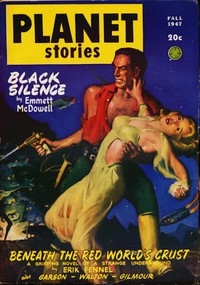
Before opening Crash Beam — Key Ideas to Explore, the edition data offers a quick orientation: 4,734 words, 21 min estimated reading time, and 1 detected text section.
The text analysis averages about 15.8 words per sentence, while the detected sections provide another way to judge how the source is divided.
Project Gutenberg metadata also associates the work with “Science fiction,” connecting these edition facts with the source record’s subject description.
Explore this collection
These alternatives are selected using recorded categories and estimated reading time.
About 22 minutes
Space Future
5,015 recorded words. 1 minutes difference from this book's estimate.
View Gutenberg source #64678About 24 minutes
Space Future
5,416 recorded words. 3 minutes difference from this book's estimate.
View Gutenberg source #63828About 24 minutes
Space Future
5,440 recorded words. 3 minutes difference from this book's estimate.
View Gutenberg source #63975Search stored excerpts and compare books → Choose by your preferences →
Choices use stored catalog measurements. Estimates vary with reading speed. A shared category is a catalog label, not a claim that two books have the same argument or literary quality.
Search reads excerpt text stored with this catalog and links to its associated Gutenberg record. The connection is stored in the site database; this tool does not recheck that every excerpt is word-for-word identical to that external record. Excerpt search does not cover every chapter and does not verify historical publication dates.
Catalog snapshot checked: 2026-09-25. Coverage: 91 public books, 91 available source excerpts.
Read the complete public-domain text at its original source.
Read on Project GutenbergThe story opens with engineer Dan Kearns already hearing the imagined epitaph for his guide beam: "a new way to die." A rocket freighter crashes in a "thundering explosion" while landing on his beam, killing two pilots. The supervisor, Rawlins, fires Kearns on the spot, but a passenger rocket is due in twenty minutes with insufficient fuel to return to Earth. The crisis escalates when the control-room operator, Stevens, is found unresponsive behind a locked door. The excerpt establishes a tight timeframe, a monopoly by a rival named Roehm, and a technical dispute over whether the beam or magnetic conditions caused the crash.
The catalog lists "Sabotage -- Fiction" as a subject, and the excerpt hints at foul play. Rawlins accuses Kearns of "passing the buck" to Stevens, but the locked control room and Stevens's unresponsive state suggest something more than incompetence. The mechanic reports that Stevens "won't answer us," and Kearns demands a torch and a doctor. The story may explore whether the crash resulted from a flawed beam, magnetic interference, or deliberate tampering. The rival Roehm, who uses "invisible light" for landing, is mentioned as a potential beneficiary of the disaster. However, the excerpt does not confirm sabotage; it only presents suspicious circumstances.
Dan Kearns is characterized by his insistence on his beam's reliability: "There's nothing the matter with my guide beam." He claims it worked the previous day under worse magnetic conditions. Yet he is fired before the investigation begins. The story places him in a double bind: he cannot send the passenger rocket back (insufficient fuel) and cannot divert it to Roehm's field (Roehm would "crash one of our rockets"). The only option is to land on his own beam, which just caused a fatal crash. The excerpt shows Kearns as a man defending his work while facing professional ruin and potential loss of life.
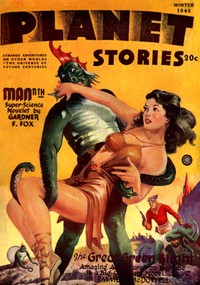
The action unfolds in an observation tower and a control room during a foggy night. The fog is described as "boiling," and searchlights cut "wide swaths of light" through it. The crash is witnessed from above: the rocket "dipped, undershot the field and vanished in a flash." The medics are "tiny white-coated" figures running across patches of light. This visual contrast between the confined tower and the chaotic field below heightens the tension. The story's 1947 publication in Planet Stories aligns with post-war interest in space travel, but the setting is grounded in a recognizable airport-like facility, not a distant planet.
The excerpt ends before the passenger rocket's fate is resolved. Readers should note that the story's title, "Crash Beam," refers to Kearns's guide beam, which may or may not be the cause of the disaster. The locked control room and the rival Roehm's invisible-light technology are details to watch as the plot unfolds. The story is a short work (under 5,000 words) and moves quickly from crisis to crisis.
That grey afternoon, the rain blurred my window as Crash Beam — Key Ideas to Explore left me unsettled—how one faulty signal could undo everything. I set it down, and my hand drifted to the shelf, pulling out Distress Signal — Key Ideas to Explore. Another quiet, tense hour followed, the same weight of a silent warning. It felt less like reading and more like waiting.
Capture what you thought, learned, and would like to remember.