About 21 minutes
Crash Beam — Key Ideas to Explore
Space Future
4,734 recorded words. 1 minutes difference from this book's estimate.
View Gutenberg source #64265
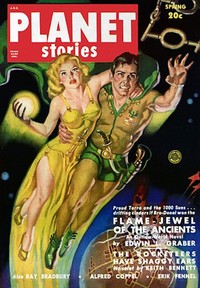
The catalog record for The First Man on the Moon — A Reader’s Guide provides practical reading context through 5,015 words, 22 min estimated reading time, and 1 detected text section.
The text analysis averages about 15.7 words per sentence, while the detected sections provide another way to judge how the source is divided.
Project Gutenberg metadata also associates the work with “Science fiction,” connecting these edition facts with the source record’s subject description.
Explore this collection
These alternatives are selected using recorded categories and estimated reading time.
About 21 minutes
Space Future
4,734 recorded words. 1 minutes difference from this book's estimate.
View Gutenberg source #64265About 24 minutes
Space Future
5,416 recorded words. 2 minutes difference from this book's estimate.
View Gutenberg source #63828About 24 minutes
Space Future
5,440 recorded words. 2 minutes difference from this book's estimate.
View Gutenberg source #63975Search stored excerpts and compare books → Choose by your preferences →
Choices use stored catalog measurements. Estimates vary with reading speed. A shared category is a catalog label, not a claim that two books have the same argument or literary quality.
Search reads excerpt text stored with this catalog and links to its associated Gutenberg record. The connection is stored in the site database; this tool does not recheck that every excerpt is word-for-word identical to that external record. Excerpt search does not cover every chapter and does not verify historical publication dates.
Catalog snapshot checked: 2026-09-25. Coverage: 91 public books, 91 available source excerpts.
Read the complete public-domain text at its original source.
Read on Project GutenbergThe story opens with John Thurmon alone on the moon, his ship wrecked and his rival Wayne dead. Coppel immediately establishes a tone of grim triumph: Thurmon kneels on the pumice, caresses the soil, and lifts his arms toward the sun, weeping with ecstasy. The narrative voice shifts between his exultation and the reader's awareness of his crime—he murdered his friend to secure glory. The lunar setting is rendered in stark contrasts: black shadows, white talus slopes, and a silence that is 'complete and utter.' This opening frames the story as a psychological portrait of a man who has achieved his lifelong ambition at the cost of his humanity.
The opening pages reveal Thurmon's state of mind through visceral details. He is 'bruised, giddy, half-crazed,' yet the certainty of death holds no terror because fame and immortality await. Coppel uses short, fragmented sentences to convey his fractured psyche: 'Fame ... immortality ! Glory ...' The murder is mentioned almost casually—'For this, he had murdered a friend'—as if it were a necessary transaction. The lunar landscape mirrors his isolation: the ship lies at a 'crazy angle,' the rocket nozzles are a 'fused lump of slag.' Thurmon's laughter within his helmet is 'weird,' and his tears streak his stubbled face. These details ground the science-fiction premise in a deeply human, if monstrous, psychology.
Thurmon's triumph is shadowed by the need to hide Wayne's body before the next crew arrives. The narrative emphasizes the silence of the moon—'complete and utter silence'—which contrasts with the anticipated broadcast to a billion people. The transmitter survived the crash, and Thurmon plans to send his message when ready, sealing his immortality. But the reader senses the fragility of his victory: 'Time would fly and in the last hours the fear would return.' Coppel builds tension by juxtaposing Thurmon's grandiose self-image ('genius ... explorer ... murderer') with the practical horror of concealing a corpse. The broadcast becomes a symbol of his ego, a 'sop' that cannot ultimately sustain him.
Coppel's lunar setting is not merely backdrop but an active force in Thurmon's psychology. The Sea of Serenity stretches before him in 'weird magnificence,' and a mountain range rises 'precipitously' against the stars. Thurmon's ego 'drank of grandeur' as he stands on the brink of the cosmos, but the description also hints at madness: 'All the splendor of Creation lay before him like a jeweled carpet. All his!' The repetition of 'all' underscores his delusion. His physical discomfort—nausea from low gravity—is quickly forgotten, but it reminds the reader of his vulnerability. The moonscape is both a stage for his triumph and a prison from which there is no return.
Thurmon's perspective dominates the story, but Coppel plants clues that his account is unreliable. He describes his murder as 'so simply done,' yet the reader must infer the details. His laughter is 'weird,' his ecstasy 'almost unbearable.' The narrative never confirms whether his version of events is accurate or whether guilt is already eroding his sanity. The story's title—'The First Man on the Moon'—is undercut by the subtitle: 'He was only the first murderer.' This tension between achievement and crime drives the plot. Readers should watch for moments where Thurmon's self-justification strains credulity, and consider how the lunar isolation amplifies his moral decay.
Coppel's story is a tight psychological thriller that uses its science-fiction setting to explore ambition, guilt, and isolation. The lunar landscape is both awe-inspiring and claustrophobic, reflecting Thurmon's inner state. As you read, pay attention to how Coppel balances Thurmon's triumphant narration with the reader's growing unease. The story's brevity—around 5,000 words—means every detail counts, from the fused rocket nozzles to the 'strange noises' from Thurmon's mouth. This is not a tale of exploration but of a mind unraveling in the void.
I keep thinking about John Thurmon’s final broadcast, that raw voice fading into lunar silence. It left me wondering what we sound like when nobody can hear us—and how a story can hold that ache. It’s a feeling I found again later, quietly echoed elsewhere, in Distress Signal — Key Ideas to Explore. That book lingers the same way, almost against my will.
A brief reflection can help important ideas stay with you longer.