About 29 minutes
Signal Red — Edition Insights
Space Future
6,587 recorded words. 0 minutes difference from this book's estimate.
View Gutenberg source #63860
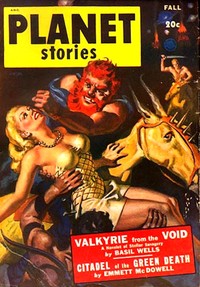
Synthetic Hero — Background and Themes can be approached with a clearer sense of reading commitment from its source measurements: 6,644 words, 29 min estimated reading time, and 1 detected text section.
The text analysis averages about 19.1 words per sentence, while the detected sections provide another way to judge how the source is divided.
Project Gutenberg metadata also associates the work with “Science fiction,” connecting these edition facts with the source record’s subject description.
Explore this collection
These alternatives are selected using recorded categories and estimated reading time.
About 29 minutes
Space Future
6,587 recorded words. 0 minutes difference from this book's estimate.
View Gutenberg source #63860About 28 minutes
Space Future
6,273 recorded words. 1 minutes difference from this book's estimate.
View Gutenberg source #63987About 28 minutes
Space Future
6,292 recorded words. 1 minutes difference from this book's estimate.
View Gutenberg source #64010Search stored excerpts and compare books → Choose by your preferences →
Choices use stored catalog measurements. Estimates vary with reading speed. A shared category is a catalog label, not a claim that two books have the same argument or literary quality.
Search reads excerpt text stored with this catalog and links to its associated Gutenberg record. The connection is stored in the site database; this tool does not recheck that every excerpt is word-for-word identical to that external record. Excerpt search does not cover every chapter and does not verify historical publication dates.
Catalog snapshot checked: 2026-09-25. Coverage: 91 public books, 91 available source excerpts.
Read the complete public-domain text at its original source.
Read on Project GutenbergThe story opens not with the protagonist but with a statue: an impervium alloy figure at Southwestern Spaceport, arms upraised, face noble. The narrator calls it a shrine—and immediately undercuts it. The plaque reads "sacrifice for the Greater Good" and bears the name George Carlin. But the narrator recalls an old witticism about history being a fabric of accepted lies. On the moon lies the real shrine: a blasted crater, scattered hull fragments, moon-lice. No art, no noble gesture. Just wreckage. That contrast—between the polished public monument and the desolate truth—drives the entire story.
The story builds its central tension around paired images. The public shrine at Southwestern Spaceport is a carefully crafted lie: a statue by Hayden Brush, who never met his subject, working only from telephoto photographs. The narrator calls it "not so much a statue of an individual as of an idea." The private shrine on the moon is a roughly circular blasted area, scorched and frozen, infested with moon-lice that "penetrate the toughest metal." One is art; the other is evidence. One inspires adulation; the other is unvisited. The narrator insists that the second is "the real, the veritable shrine." This doubling extends to the story's structure: the public knows a hero named George Carlin; the narrator knows a dead man named Verne Harris. The reader is asked to hold both versions in mind.
The story refuses a straightforward redemption arc. George Carlin is introduced as "an irresponsible egocentric who had never done anyone a good turn." The narrator offers a specific example: Carlin destroyed a doctor's career to suppress an article linking his company's Antarctic thawing operations to the outbreak of Matson's Disease. When Carlin himself contracts the disease, he thinks of building a spaceship only as "the most spectacular form of suicide ever devised." The narrative then traces his physical and social collapse: he becomes unrecognizable, is ejected from his own company, and ends up a near-boneless alcoholic in a cabin. The cure takes three and a half years. Only then does he begin to study rocket fuels, take a minor job under an assumed name, and nurse a single dream: to stand on the moon and apologize to Verne Harris. The story gives us the moral transformation, but it is slow, painful, and incomplete.
The story's most pointed observation is about how history is written. The public believes George Carlin was the first man to reach the moon alive. Children are taught this in school. When the narrator tries to tell the truth, he is called an "evil-minded muckracker" and gets his nose fractured. He has "surrendered to the inevitable." The real hero, Verne Harris, is unknown; even the narrator admits he has never heard of him before. The story ends with the narrator's confession: "Once I was George Carlin." This final line reframes everything that came before. It is not a confession of heroism but of complicity in a lie. The narrator has spent fourteen years trying to compensate, but the myth is too deeply embedded. The story does not offer a solution; it simply records the weight of a false monument.
The story is short—under seven thousand words—but it packs a surprising density of irony and implication. Readers should pay attention to the small details: the telephoto lens, the moon-lice, the borrowed book on rocket fuels. These are not decorative; they are the evidence from which the narrator constructs his case. The story asks not whether the myth is true, but what it costs to live with a lie. It is a meditation on reputation, guilt, and the strange shape of atonement.
Reading about Verne Harris’s erased sacrifice, I thought of my grandfather’s quiet, unrecorded kindnesses—the ones that shaped us, yet left no monument. That ache of forgotten goodness surfaced once before, in Grandma Perkins and the Space Pirates — Background and Themes, where a grandmother’s overlooked cunning held the whole story together. Some deeds simply glow in the dark, unnoticed.
A brief reflection can help important ideas stay with you longer.